
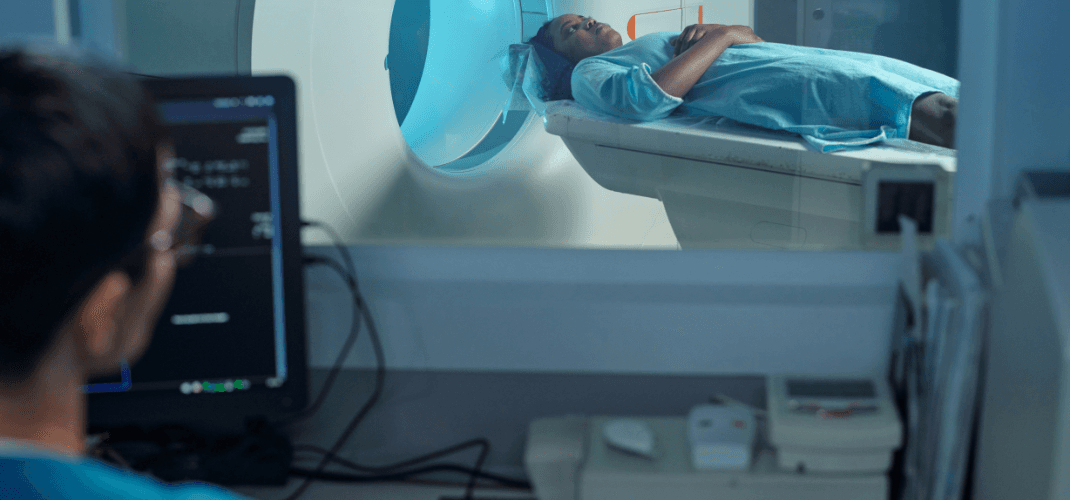
The Frustration of a "Normal" Scan: Why Standard MRI Isn't Enough
One of the most challenging scenarios in mild Traumatic Brain Injury (mTBI) litigation is the patient who suffers from debilitating cognitive symptoms yet returns a "normal" brain scan. When standard clinical imaging—like CT or traditional MRI—fails to detect visible pathology, it is often misinterpreted as a "lack of injury."
Today, however, advanced neuroimaging techniques like Diffusion Tensor Imaging (DTI) have proven that a standard MRI simply isn't designed to look close enough.
The Limitations of Traditional MRI
Traditional T1 and T2 MRI sequences are excellent for identifying macro-structural issues. They are built to detect gross abnormalities like large hematomas, tumors, or severe contusions. However, they are fundamentally limited when it comes to the microscopic reality of an mTBI.
When the brain is subjected to rapid acceleration and deceleration forces, the resulting damage is often Traumatic Axonal Injury—the microscopic shearing and stretching of the brain’s internal wiring.
- The Blind Spot: These injuries are invisible to the naked eye.
- The Consequence: Traditional MRIs lack the sensitivity to visualize this microscopic damage, often leaving patients and legal teams without objective evidence of the harm done.
How DTI Changes the Game: Roadmap vs. Traffic Flow
If a traditional MRI is like looking at a static roadmap, DTI is like analyzing the actual flow of traffic.
DTI is the MRI technique of choice to evaluate the properties of the brain’s white matter. Rather than just taking a still picture of brain tissue, DTI measures the direction and magnitude of water molecules diffusing along neural pathways.
- In a Healthy Brain: Water travels smoothly and predictably along these tracts.
- In an Injured Brain: Damaged axons disrupt this flow, causing water to diffuse more randomly.
Objective Data Over Visual Review
When neuroimaging experts interpret DTI, they don't just rely on what they see; they rely on objective, quantifiable data.
The transition to quantitative DTI represents a shift from "visual review alone" to a combination of visual inspection and statistical proof. When licensed experts present these metrics in court, they are providing quantifiable evidence of abnormalities that standard clinical sequences simply cannot detect.
Ready to Move Beyond the "Normal" Scan?
If you need to upgrade from a standard MRI to a rigorous, data-driven analysis, explore our Quantify® report.
Our Case Consultation team ensures that the correct data is collected, advanced processing is performed, and the appropriate licensed experts are in place to support your case.